OPPOSING INTERPRETATIONS OF FOUNDATIONAL DOCUMENTS.
#0
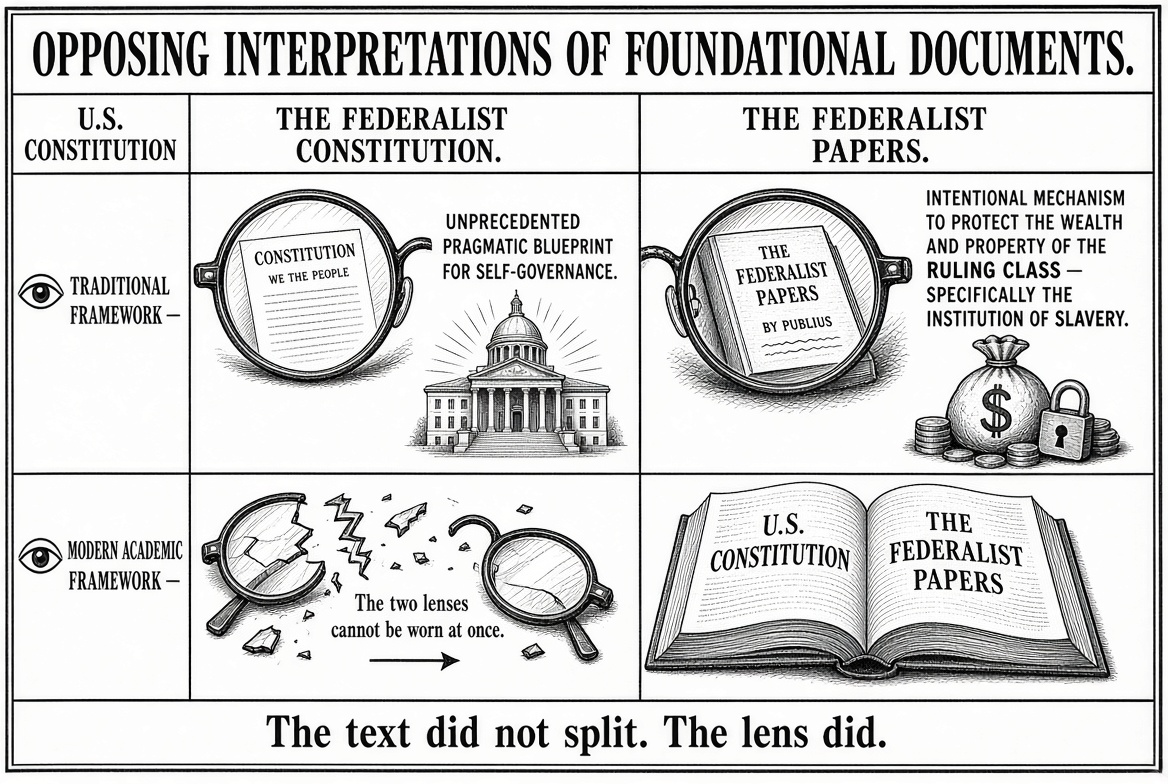
The Constitution and Federalist Papers are read through two incompatible lenses: one as a mechanism to protect wealth, the other as a traditional framework. The text did not split. The lens did.
The plate shows two frameworks that cannot be worn at once.
SteelMan: Interpretive disagreement is real. The same clauses are cited for opposite conclusions.
Cut: The plate does not show that one lens is required by the text.
THE U.S. CONSTITUTION — TRADITIONAL FRAMEWORK.
#1
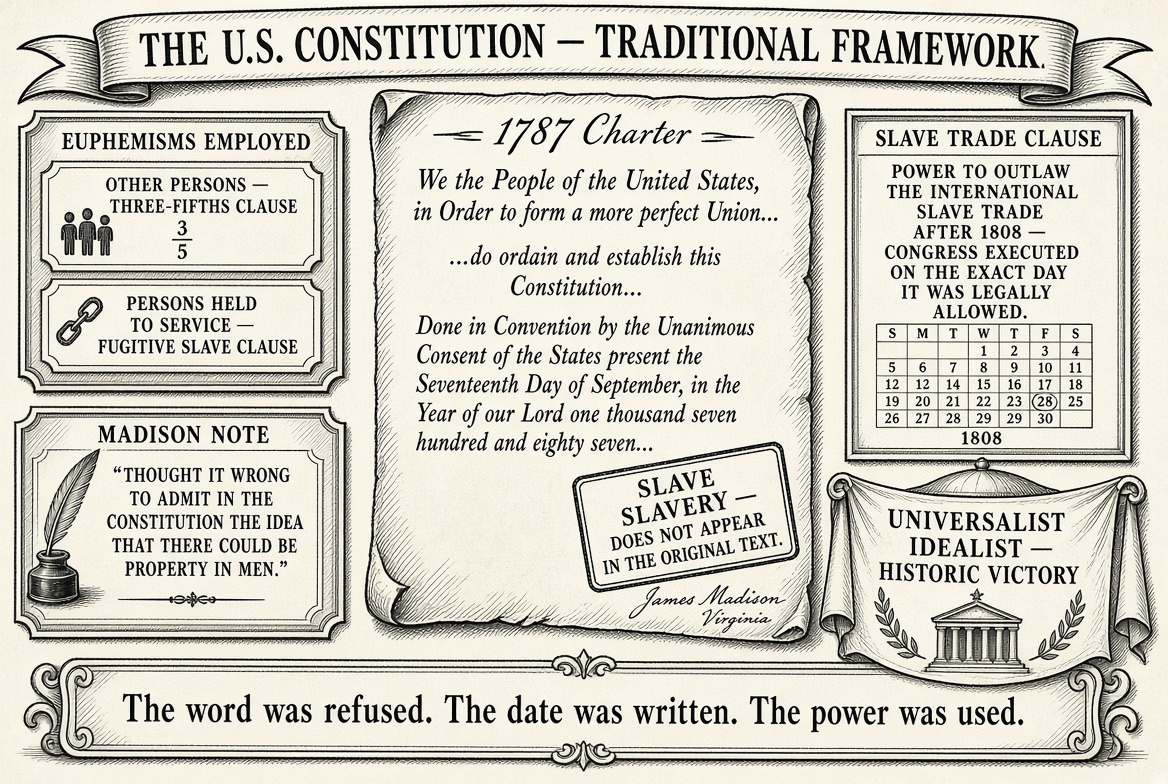
The slave-trade clause set a 1808 deadline that Congress executed on the day it became legal; the three-fifths clause counted 'other persons' for representation.
The plate notes the power to outlaw the international slave trade after 1808 and the three-fifths clause.
SteelMan: Article I, Section 9, Clause 1 delayed prohibition until 1808. The Act of 1807 took effect 1 January 1808. The three-fifths clause is in Article I, Section 2.
Cut: Executing a delayed ban is not evidence that the clause was designed as an abolition mechanism.
THE U.S. CONSTITUTION — MODERN FRAMEWORK.
#2
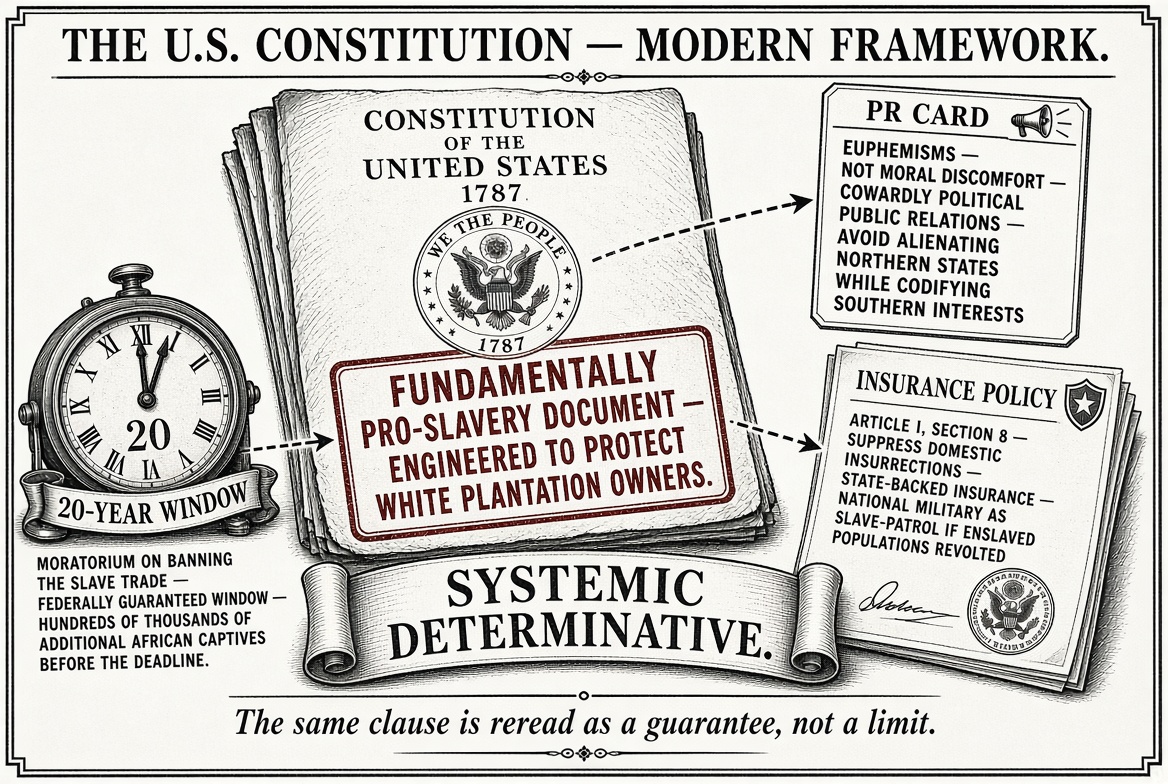
The same clauses are reread as euphemisms that codified southern interests while avoiding northern discomfort, not as moral discomfort or public relations.
The plate treats the language as a guarantee rather than a limit.
SteelMan: The clauses were compromises. Modern readers can argue they protected the institution.
Cut: The plate converts compromise language into proof of intent to protect white economic dominance without additional evidence of drafting motive.
THE FEDERALIST PAPERS — TRADITIONAL FRAMEWORK.
#3
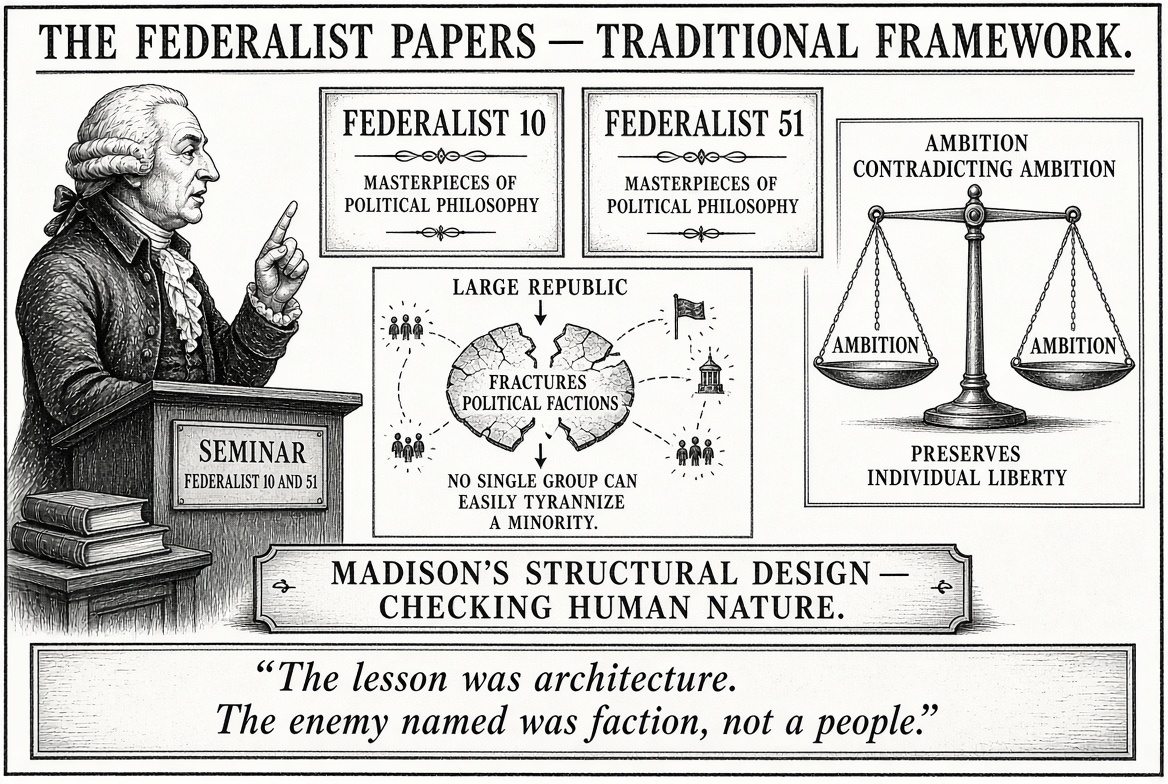
Federalist 10 and 51 describe a structural design in which ambition counters ambition and a large republic fractures factions so no single group can easily tyrannize a minority.
The plate presents Madison's argument as checking human nature.
SteelMan: Federalist 10 and 51 are the standard texts for that design.
Cut: The plate does not address whether the design succeeded or how later amendments altered it.
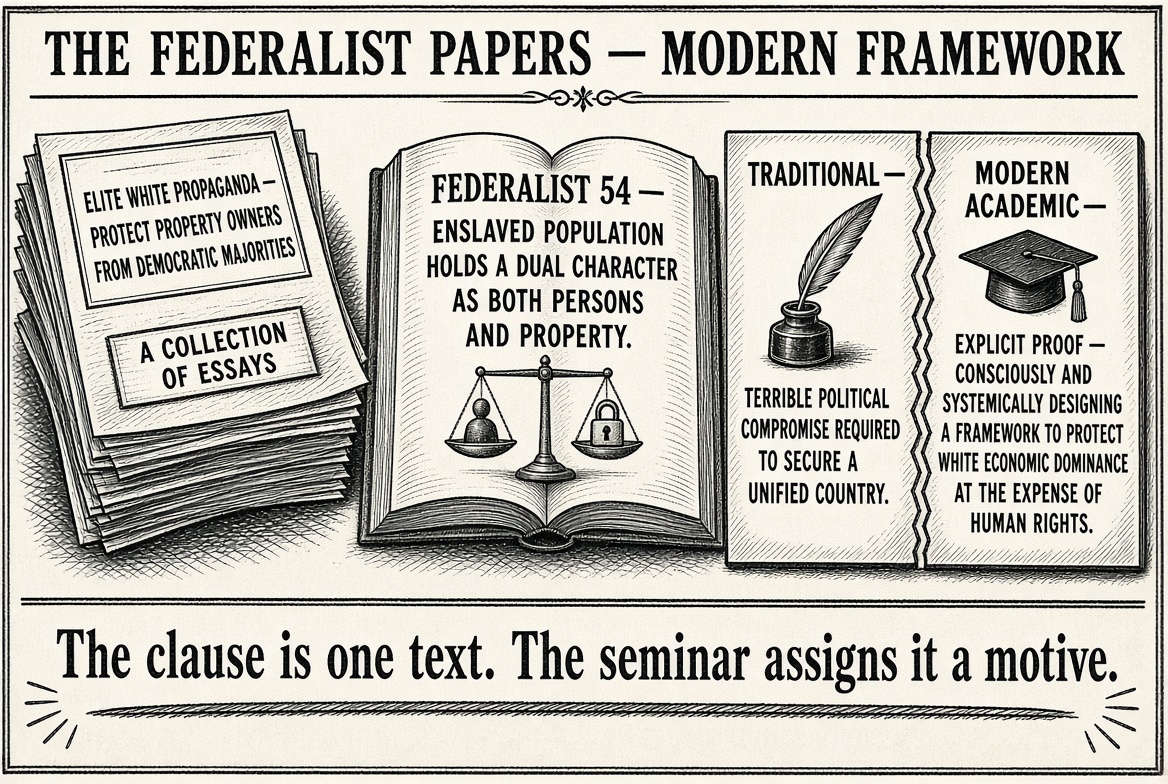
THE FEDERALIST PAPERS — MODERN FRAMEWORK.
#4
Federalist 54 treats the enslaved population as holding a dual character as both persons and property, offered as explicit proof of a conscious design to protect white economic dominance.
The plate cites Federalist 54's dual-character language.
SteelMan: Madison did write that slaves are considered in a mixed character of persons and property.
Cut: Federalist 54 is an argument about representation, not a confession of a system designed for dominance. The plate treats the dual character as proof of motive.